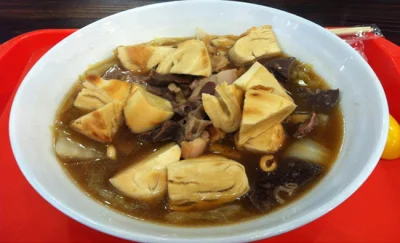
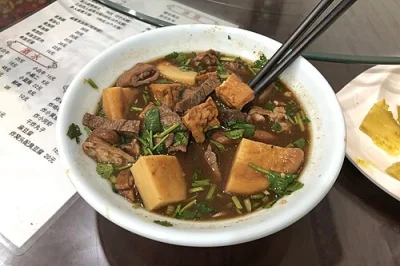
Luzhu huoshao is not only a bowl of braised pork offal, tofu, chopped bread, and dark broth. Much of the final flavor comes from how the bowl is seasoned at the counter or at the table. Garlic, fermented tofu, chive flower sauce, vinegar, chili oil, and cilantro can make the same base bowl taste sharper, richer, cleaner, or heavier.
This guide focuses on seasoning logic rather than the basic identity of the dish. If you are still learning what goes into the bowl, start with the luzhu huoshao ingredients guide. If you need the basic ordering sequence, read how to order luzhu huoshao in Beijing first.
Why seasoning matters so much
A good luzhu huoshao broth is savory, dark, and aromatic, but it is also carrying pork intestine, pork lung, tofu, and bread. Those ingredients need balance. Without seasoning, the bowl can feel heavy or flat. With too much seasoning, the broth can lose its layered braised flavor and become only salty, sour, or spicy.
The best approach is to season gradually. Taste the broth first, then add one strong element at a time. Old snack shops often have a house rhythm, but visitors should avoid turning the bowl into a mixed sauce before understanding the base flavor.
Garlic: the most important sharp note
Garlic is the seasoning most strongly associated with luzhu huoshao. It cuts through offal richness and makes the broth feel brighter. In some shops it appears as minced garlic, garlic water, or a small spoonful of garlic paste. A little can make the bowl more vivid; too much can overwhelm the broth and make every bite taste the same.
For first-timers, add garlic in a small amount and stir only part of the bowl. This gives you two experiences: the original broth on one side and the sharper garlic-seasoned broth on the other.
Fermented tofu and chive flower sauce
Fermented tofu adds salty depth and a faintly creamy fermented note. Chive flower sauce brings a green, pungent aroma that Beijing diners also know from hotpot dipping sauces. In luzhu huoshao, these seasonings should support the broth rather than replace it.
If the shop offers both, use them carefully. Fermented tofu deepens the bowl; chive flower sauce lifts the aroma. Together they can be excellent, but they can also make the broth too salty if the base soup is already strong.
Vinegar: useful, but not always necessary
Vinegar can make a heavy bowl easier to eat because acidity lightens fat and offal. It is especially useful if the broth tastes very rich or if the bread has absorbed a lot of soup. However, vinegar changes the identity of the broth quickly, so it should not be the first thing you add.
Try a spoonful of broth first. If the bowl feels dull or too rich, add a small splash of vinegar and taste again. If the broth already has a clean herbal aroma, you may not need vinegar at all.
Chili oil and cilantro
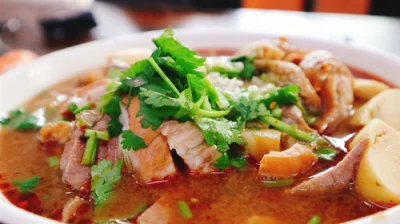
Chili oil gives color, fragrance, and heat. It works best when the oil is aromatic rather than only spicy. Cilantro adds freshness and helps the bowl look and taste less dense. Both are common, but neither should hide the braised broth.
A balanced bowl might use a little garlic, a small amount of fermented tofu or chive flower sauce, a light chili oil layer, and cilantro on top. If you like stronger flavors, adjust after a few bites instead of seasoning the whole bowl heavily from the start.
How to season as a first-time visitor
Order a standard bowl first. Take one bite of bread and tofu with broth, then one bite of offal. After that, add garlic and a small spoonful of chili oil. Taste again. Only then decide whether vinegar or fermented tofu is needed. This order helps you understand what each seasoning changes.
Do not judge luzhu huoshao only by the strongest ingredient. The appeal is the combined texture of chopped bread, tofu, broth, and offal. Seasoning should make that combination clearer, not turn the dish into a single loud flavor.
Where this fits in the luzhu huoshao cluster
For a broader overview, read the main luzhu huoshao guide. If you want to compare it with other old Beijing offal dishes, use the luzhu huoshao vs chaogan vs baodu guide. For shop-selection advice, see where to try luzhu huoshao in Beijing.
References
Background and image references checked against Beijing Municipal Government dining information and Visit Beijing food listing.
Comments (0)