Doufunao and laodoufu are easy to confuse on a translated Beijing breakfast menu. Both are tofu-based bowls, both can be savory, and both may appear near fried dough, shaobing, baozi, or soy milk at a morning counter. But they are not the same eating experience.
This guide explains the difference in practical terms: texture, gravy, condiments, ordering clues, and which one a first-time visitor should try. For the broader single-dish guide, start with Beijing doufunao. For toppings and breakfast sides, read the doufunao toppings and pairings guide.
The quick answer
Doufunao is softer and more pudding-like. In Beijing breakfast shops it is usually served with a warm savory gravy poured over delicate tofu curds. Laodoufu is generally firmer, heavier, and more condiment-driven. It may use stronger sauces, chili oil, sesame paste, garlic, vinegar, or other seasonings depending on the shop and region.
The boundary is not perfectly identical everywhere in northern China, so the safest rule is this: doufunao is about soft tofu under gravy; laodoufu is about firmer tofu with more assertive seasoning.
Texture: soft curd versus firmer body
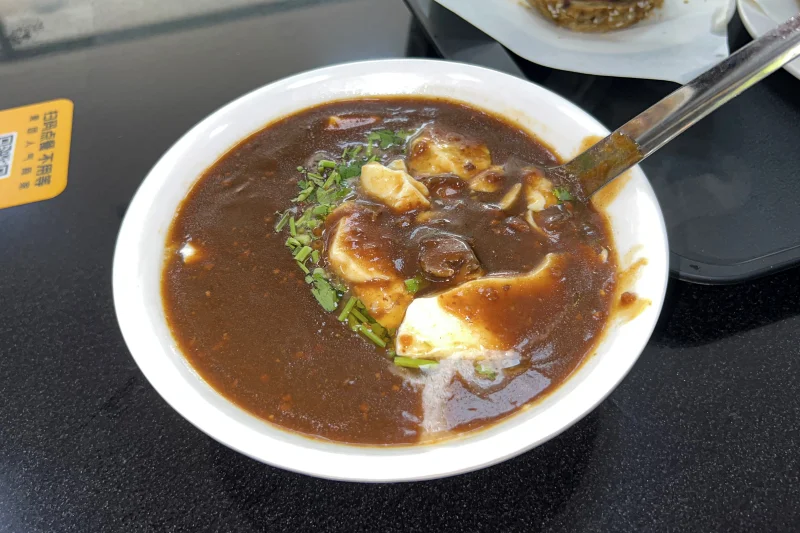
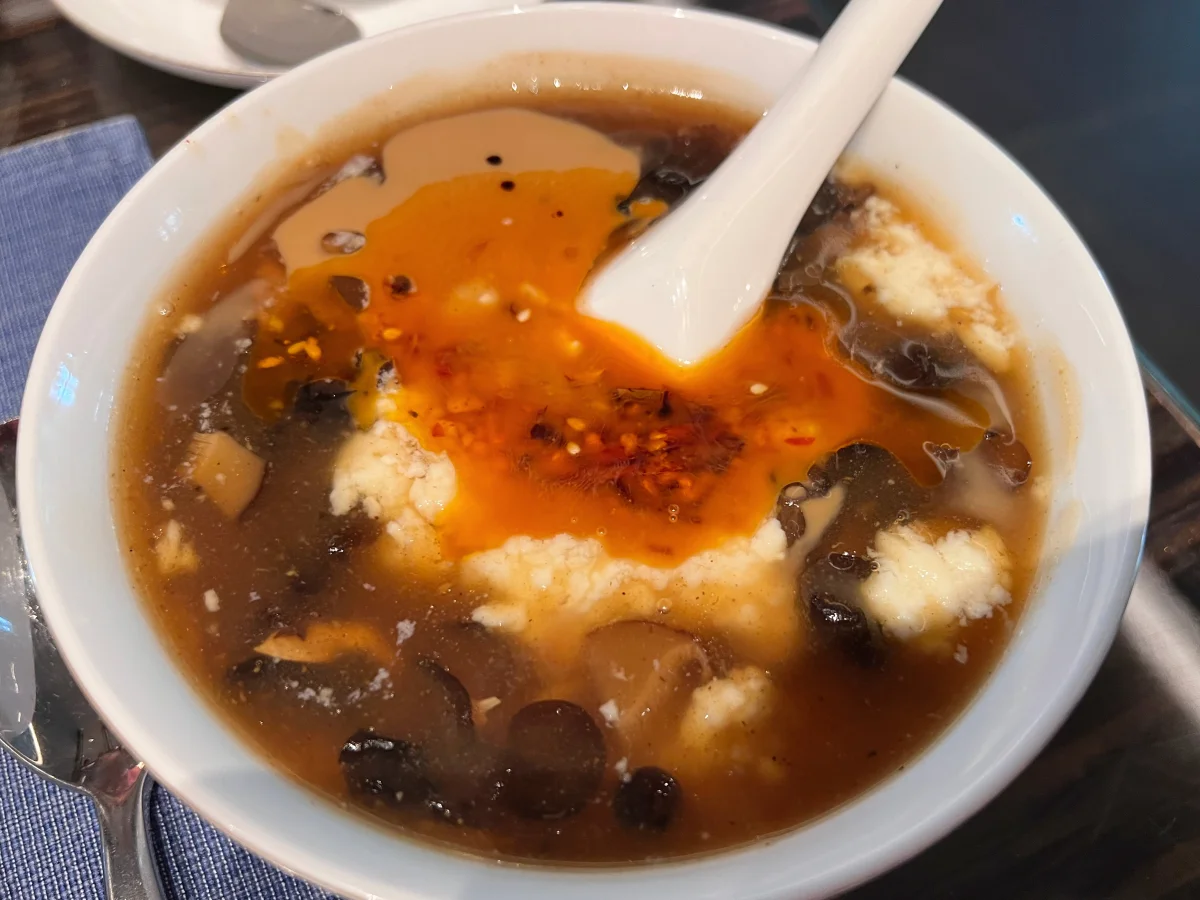
Texture is the easiest way to understand the difference. Doufunao should feel delicate. A spoon cuts through it with almost no resistance, and the tofu breaks into soft pieces under the gravy. The best versions feel warm, smooth, and fragile.
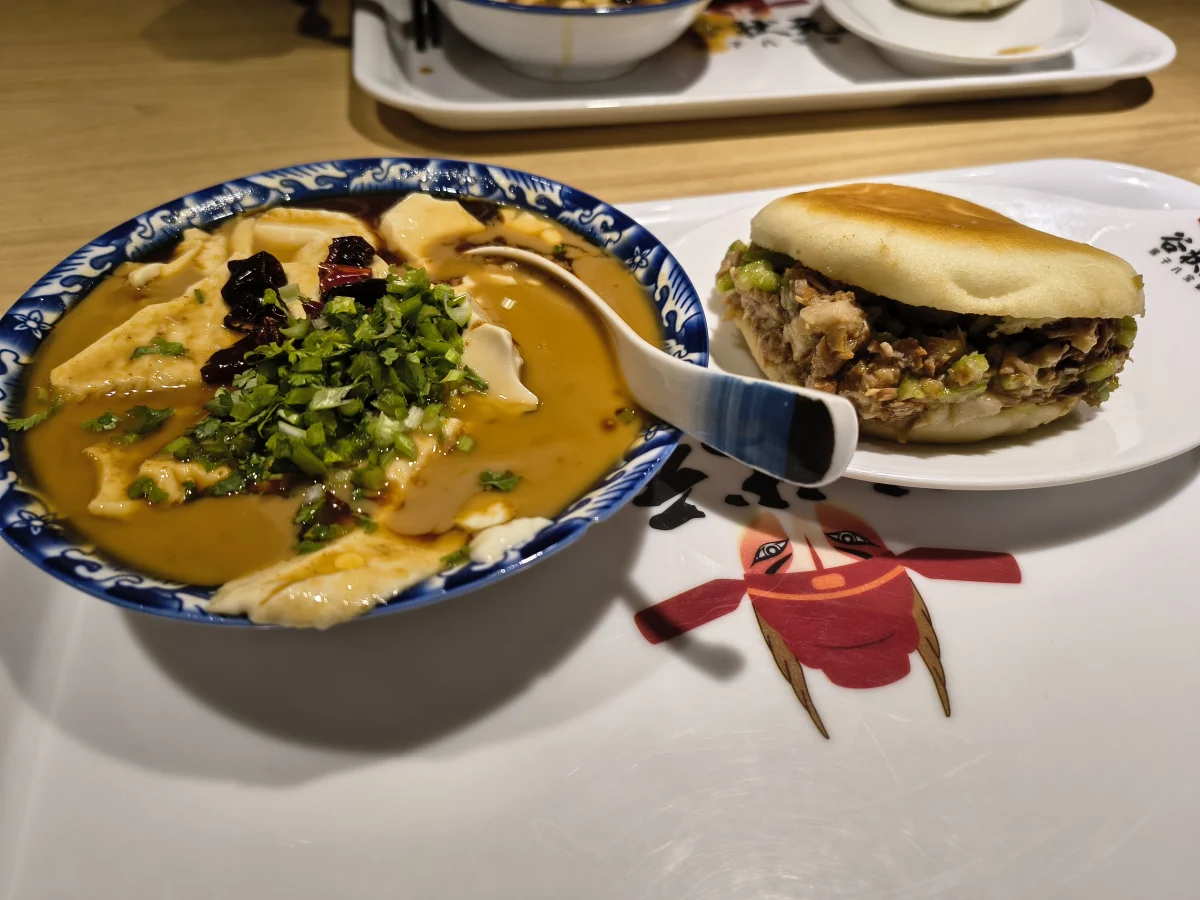
Laodoufu usually has more body. It can still be soft, but it often holds shape better and feels denser in the mouth. That firmer texture lets it stand up to stronger condiments. If a bowl looks like it can carry chili oil, sesame sauce, garlic, and vinegar without collapsing into soup, it is probably closer to laodoufu.
Gravy: doufunao depends on the lu
In Beijing-style doufunao, the savory gravy, or lu, is central. The tofu itself is mild, so the gravy gives salt, aroma, and depth. It may include soy sauce, starch-thickened broth, egg strands, wood ear, mushroom, daylily, or a meat-based sauce in some halal breakfast shops.
The gravy should coat the tofu without making the bowl too heavy. If it is balanced, every spoonful has soft curd and enough savory flavor. This is why doufunao works so well with youtiao, shaobing, or a tea egg.
Condiments: laodoufu can be bolder
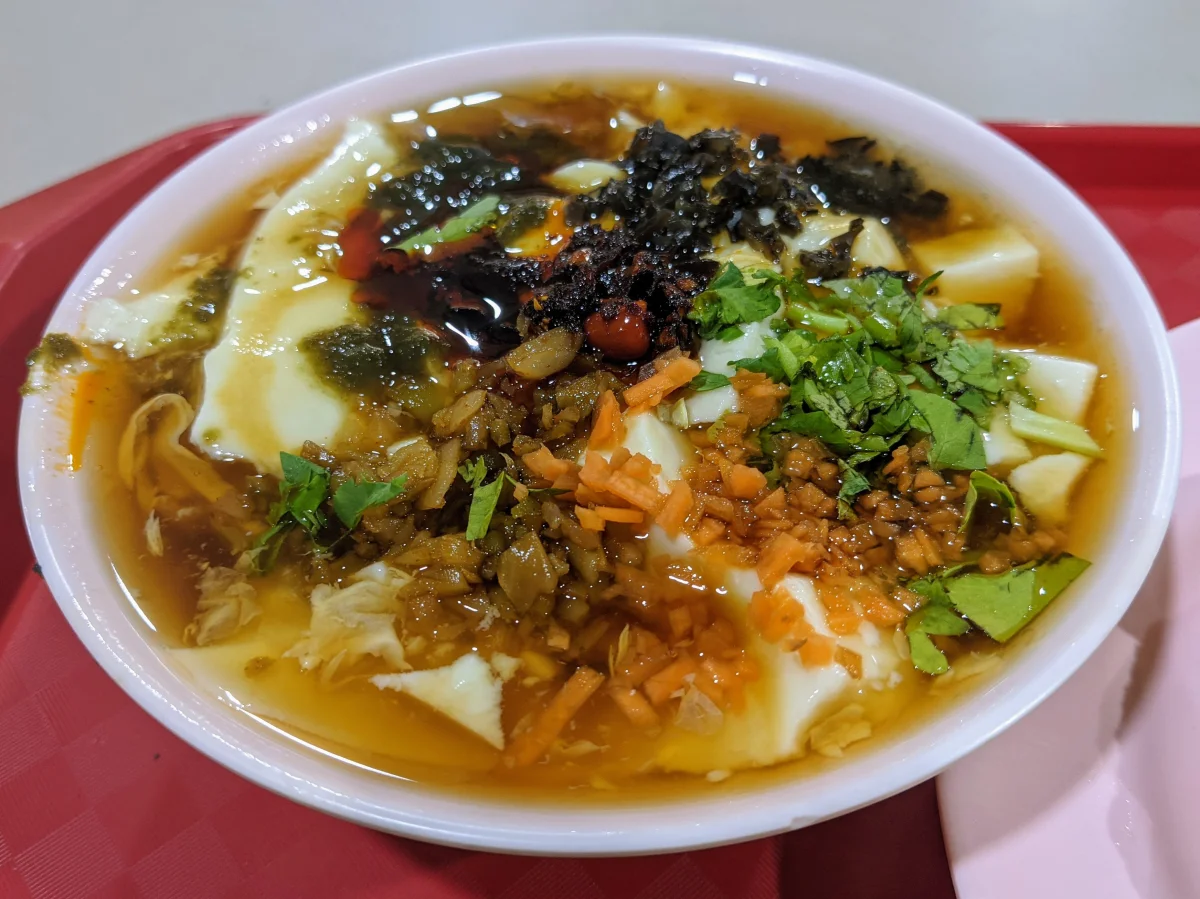
Laodoufu often feels more strongly seasoned. Depending on the shop, it may use chili oil, sesame paste, garlic, soy sauce, vinegar, chive flower sauce, fermented tofu, or other northern condiments. The tofu is not only covered; it is dressed.
This does not mean laodoufu is always spicy. It means the bowl usually tolerates a heavier hand. Doufunao is easy to overwhelm with too much chili oil or vinegar. Laodoufu can absorb those stronger flavors more naturally.
Why translated menus cause confusion
English menus may translate both dishes as “tofu pudding,” “bean curd,” or “soft tofu.” Those words are not wrong, but they are too broad. They do not tell you whether the bowl is pudding-soft and gravy-led, or firmer and condiment-led.
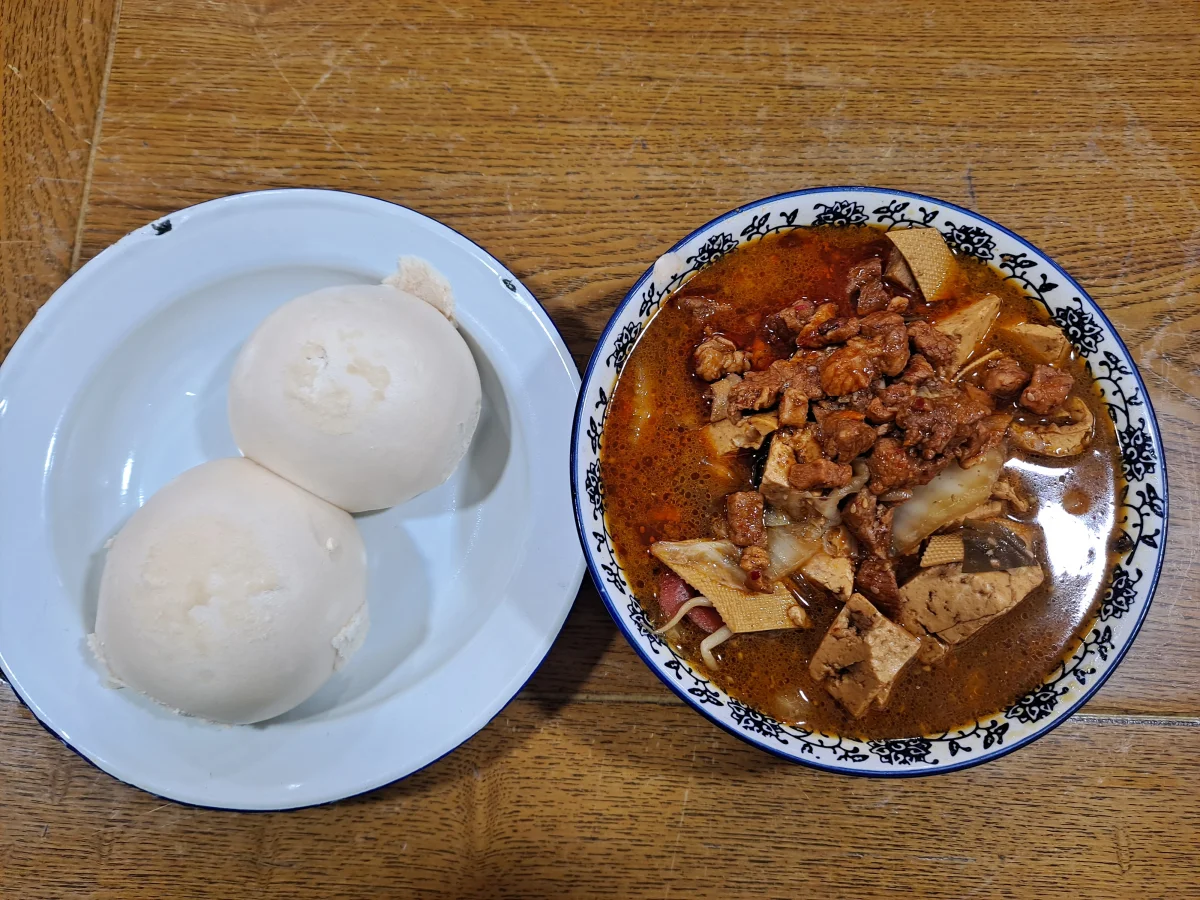
If you are ordering from a picture menu, look at the surface. Doufunao often shows soft white tofu under brown or amber gravy. Laodoufu may look chunkier, denser, or more heavily dressed with visible condiments. If the shop has both names on the menu, do not assume they are interchangeable.
Which one is more Beijing?
Doufunao is the more straightforward Beijing breakfast association for visitors. It fits naturally beside Beijing breakfast staples such as youtiao, tea eggs, baozi, and sesame flatbread. Many Beijing breakfast counters sell it as a warm, gentle morning bowl.
Laodoufu appears in northern food culture more broadly, and the exact style can vary by locality. When using laodoufu images or examples from outside Beijing, it is better to treat them as texture and seasoning comparisons rather than proof of one fixed Beijing recipe.
Which should you order first?
If you are new to Beijing breakfast, start with doufunao. It is softer, warmer, and usually easier to understand. Order one bowl with youtiao or shaobing, taste the gravy first, then add chili oil only if needed.
Try laodoufu when you want a stronger tofu bowl and are comfortable with condiments. It is better for people who like sauces, garlic, chili oil, or a firmer bean curd texture. If you are sensitive to rich seasoning, ask before adding extra toppings.
How to ask in a breakfast shop
The simplest method is to use the Chinese names: doufunao and laodoufu. If you are unsure which one is being served, ask whether it is softer or firmer, or point to the bowl and ask whether it is doufunao. In many small shops, staff will answer quickly because breakfast service moves fast.
You can also ask whether the bowl is “lu de” (with gravy) or whether you add seasonings yourself. A gravy-led bowl is usually closer to doufunao. A condiment-led bowl is usually closer to laodoufu.
Pairings are different too
Doufunao pairs best with crisp or chewy sides because the bowl itself is soft. Youtiao gives crunch and oil. Shaobing gives wheat aroma. A tea egg adds protein without changing the tofu texture too much.
Laodoufu can feel more like the main savory item on the table. Pair it with a plain wheat side if the sauce is strong. If the bowl already has chili oil, garlic, or sesame paste, avoid ordering too many other heavy flavors at the same time.
Common first-timer mistakes
- Calling both dishes “soy milk”: neither is a drink like doujiang.
- Expecting sweetness: Beijing doufunao is usually savory, not dessert-style douhua.
- Adding condiments too early: taste the base first, especially with doufunao.
- Assuming every region uses the same definition: laodoufu varies more than visitors expect.
- Skipping the side dish: soft tofu bowls need texture contrast.
The best way to remember the difference
Think of doufunao as soft tofu pudding plus savory breakfast gravy. Think of laodoufu as a firmer tofu bowl that can carry stronger condiments. That distinction will not solve every regional variation, but it is enough to help you order confidently in Beijing.
Once you understand the difference, the breakfast counter becomes easier to read. Doufunao is the gentle bowl to start with. Laodoufu is the bolder tofu direction to explore next.
References and image sources
Food background was checked against Beijing municipal tourism pages and licensed Wikimedia Commons image records. External links are provided for attribution and verification only.
Comments (0)